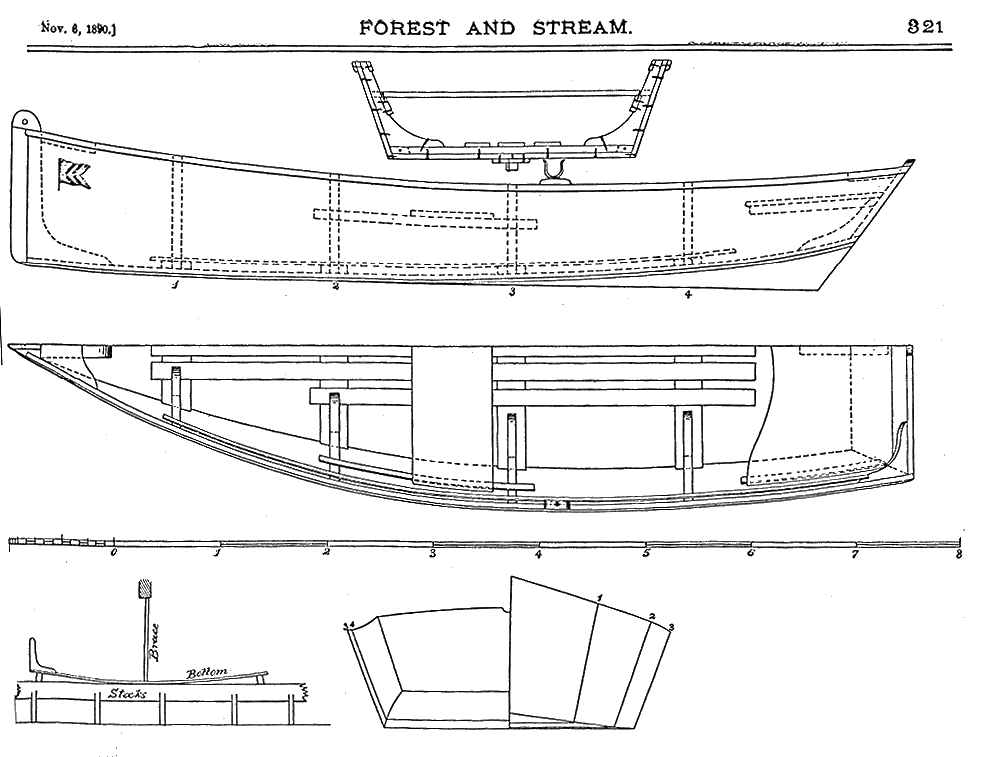
Beyond the Blueprint: Unveiling the Untapped Potential of Free Boat Plans for Education
Free boat plans for educational institutions are a treasure trove waiting to be explored. While many focus on the immediate benefit â€" acquiring plans â€" we often overlook the broader educational and entrepreneurial opportunities these resources offer. This article delves into rarely discussed aspects, aiming to inspire educators, students, and hobbyists alike.
The Hidden Curriculum: Beyond Boat Building
Most see free boat plans as a simple pathway to building a boat. But what if we framed them as a multi-faceted learning experience?
Q: How can free boat plans foster entrepreneurship?
A: Consider this: a student builds a boat using free plans, refines the design, and then offers custom modifications or builds-to-order. This isn't just about woodworking; it’s about project management, marketing, customer service, and financial literacy â€" all skills highly valued in the modern job market. The initial investment is minimal, allowing for rapid prototyping and iteration, a crucial aspect of entrepreneurial learning.
Q: How can boat plans promote STEM integration?
A: Forget just carpentry! Boat building is a fantastic platform for integrating STEM (Science, Technology, Engineering, and Mathematics). Students can analyze hydrodynamics, explore different materials' strengths and weaknesses (requiring physics and chemistry knowledge), and even use CAD software to design and optimize boat hulls, bridging the gap between theoretical knowledge and practical application. This hands-on learning can dramatically improve STEM comprehension and engagement.
Real-World Examples: Stories of Innovation
Let's move beyond the theoretical and examine successful case studies. While specific examples of institutions leveraging free boat plans in innovative ways are limited in publicly available data (much of this happens at a local level), we can extrapolate:
Imagine a school using free plans as the basis for a collaborative project. Different student groups tackle distinct aspects: one focuses on the hull design using CAD, another on the sail rigging (incorporating physics and engineering), and yet another on the marketing and fundraising aspect to secure materials. This fosters teamwork, communication, and problem-solving abilities far beyond the scope of a traditional classroom setting.
Another example could involve a community college partnering with a local boatyard. Students utilize free boat plans to construct smaller vessels, gaining valuable practical experience while contributing to the yard’s inventory or even using the finished products for educational outings.
Challenges and Solutions: Navigating the Open Waters
Accessing and utilizing free boat plans isn't without its hurdles. Finding reliable, well-documented plans is a challenge, as is ensuring the plans are suitable for the students' skill levels.
Q: How can educational institutions overcome the challenges of using free boat plans?
A: Collaboration is key. Institutions should establish networks with other schools, boatyards, and experienced boat builders to share resources, review plans, and provide mentorship. Curriculum integration is also essential. Incorporate boat building into existing courses (e.g., physics, math, engineering) rather than treating it as a standalone project. Finally, open-source platforms and community-driven plan repositories can significantly improve the quality and accessibility of free resources.
The Future of Free Boat Plans in Education
The potential is immense. By moving beyond simply seeing free boat plans as a set of instructions, educational institutions can unlock a wealth of pedagogical opportunities, nurturing entrepreneurial spirit, boosting STEM skills, and fostering hands-on learning experiences that leave a lasting impact. The future is not just about building boats, but about building futures, one carefully crafted plan at a time.

0 comments:
Post a Comment
Note: Only a member of this blog may post a comment.